At this year’s conference, Hillary Hart and Jamie Conklin shared insights from their research on "New Models and Images for Technical Communication."
LJ: Thank you for taking time to talk with us about the “Models and Images” project!
The ability to articulate the value of technical communication is important in today’s competitive marketplace. Your research suggests that technical communicators are describing the work they do in new, and sometimes surprising, ways.
HH & JC: We found that as soon as we asked focus-group participants to think about metaphors, models, and images that would accurately describe what they do in the workplace, folks came up with an amazing array of active, performance-based, empowering and empowered descriptors. Words like “director” and “orchestra leader” and “juggler,” all of which came up in every group, speak to a sense of authority and performance that we found surprising. Also, in the dominant category we call Emerging Forms, descriptors such as “evangelist,” “architect,” and “coach” invoke positions of power and huge impact on others.
What happened to all those shy, introverted technical communicators of yore? The groups we spoke with certainly talked about the struggle to be “heard” in their companies and organizations, but they had no doubt about the necessity and importance of being heard - -importance to the core missions of their companies. These technical communicators were focusing their energies on engaging all sorts of people, internal and external to their organizations, in enhancing the flow and quality of information. Developing both the information itself and the uses of it were seen as work that cannot be offshored.
We also found that though technical communicators continue to talk about demonstrating their value, they are now also keen to become more influential within their organizations and on their project teams. Perhaps we are seeing practitioners shift their emphasis from “proving it” to “doing it”—maybe we are no longer so interested in developing a generalized business case for technical communication that we can base on an STC-sponsored study, and are more interested in rolling up our sleeves and taking leadership in our own workplaces?
Of course, communicators are also producing a dizzying array of products, that was clear.
LJ: You find that, increasingly, technical communicators are adopting a process-oriented approach for their work. What can you tell us about the impact of this approach on creativity and innovation?
HH & JC: Our research, which was based on focus groups and a conversational method, did not touch specifically on creativity and innovation. Certainly the technical communicators we met with seemed to be creative and innovative people, but we were not exploring the relationship between work situations and innovation.
However, it certainly was evident that the technical communicators we met with see their value and purpose more in relation to the processes they contribute to than to the deliverables they produce. We wonder if this is evidence that technical communication practice is becoming increasingly social and interactive, and that practitioners are contributing largely through the ways they participate on teams.
LJ: Your research describes “self-actualization” and “transformation of the profession” as important professional objectives for those in technical communication.
HH & JC: It is not so much that we see these as important objectives, as it is that the people we met with tended to talk about these things. When we asked people to tell us about their personal objectives, they most often mentioned significant and potentially transformative goals. For example, more than once people talked about their desire to build community. One academic talked about wanting to develop a more complete or profound understanding of the needs of users. A consultant told us that she had moved her practice from user advocacy to user empowerment. Other people talked about wanting to write plays or novels, and still others spelled out their vision for leadership of the profession.
We wonder if these far-reaching personal objectives, which usually went far beyond the recent concrete achievements that people described, imply that many technical communicators are feeling increasingly confident and ambitious. Imagine a cohort of resilient, determined technical communicators who are intent on bringing the value of their discipline to their organization, come hell or high water. This may be wishful thinking on our part, but we wonder if the profession has matured to the point where we are shifting from the “business case phase,” where we try to describe our value to others, to the “evidence in action” phase, where we individually take concrete steps to bring our value to our teams and organizations.
LJ: Thank you for talking with us about this important topic. We’ll look for a complete report on your research to be published in Technical Communication later this year.

Wednesday, May 31, 2006

Wednesday, May 24, 2006
Conference calendars of interest
The STC Management SIG list is really active today discussing how to make next year’s conference even better than it was this year. Why not start planning for next year’s conference today? We know where future STC conferences will be held:
Minneapolis, MN 2007
Philadelphia, PA 2008
Atlanta, GA 2009
Source: Intercom
Other conferences of interest before then? Two good lists have appeared. Check Current Events at InfoDesign and the post on Web 2.0-related conferences at Brand Dialogue.
Minneapolis, MN 2007
Philadelphia, PA 2008
Atlanta, GA 2009
Source: Intercom
Other conferences of interest before then? Two good lists have appeared. Check Current Events at InfoDesign and the post on Web 2.0-related conferences at Brand Dialogue.
Thursday, May 18, 2006
Holly Harkness on change management
Holly Harkness, Manager of IT Documentation at Mirant Corporation and incoming president of STC Atlanta, presented her views on change management at the conference this year. We're following-up with Holly to discuss this important topic.
Hello, Holly. Welcome to the conference blog at STC Chicago! Your presentation on change management really struck a chord with those who attended.
Thanks! I was pleasantly surprised at the number of people who showed up.
Q: If you had your way, would all technical communicators add the change management skill set to their portfolios?
A: Yes! Good technical communicators are probably already instinctively implementing change management strategies in their work, but I’d recommend that everyone in our profession take the time to become familiar with this growing field so that they can articulate it to their management or prospective employers. We should be selling this as an added service we can provide.
Q: You’ve written about two fairly recent opportunities where technical communication professionals needed to adjust to rapidly changing environments: Y2K and Sarbanes-Oxley. Do similar opportunities exist out there today?
A: Good question! I’ve just agreed to deliver an STC Webinar in the fall on “Ten Ways to Increase Your Value as a Technical Communicator” where I’ll take up this subject in more detail.
One potential opportunity for technical communicators is disaster recovery or business continuity. After 9/11 many organizations began to take this more seriously. After Katrina, executive managers were even more convinced to fund these kinds of programs (even as they are cutting other types of projects).
Where do we come in? In a disaster, communications and clear procedures are key. Employees need to know what to do and where to go to keep operations going. Technical communicators are well positioned to take on this documentation effort. In addition, there’s a huge IT component to business continuity that requires detailed documentation that can be understood by the personnel who are tapped to start up the networks.
Q: Will you be offering workshops in change management through your chapter? Is this type of workshop STC chapters and SIGs should pursue? And, do you think change management will become an important career path for tech comm professionals?
A: I spoke at our chapter meeting on this topic last year, but workshops are a good suggestion –- for both chapters and SIGs.
This career path will probably appeal more to technical communicators who enjoy project management, training, and other people-oriented activities. But some aspects of this profession are less appealing, such as becoming a spin doctor for bankruptcies, layoffs, plant closings.
I think the biggest immediate opportunity for tech comm professionals to participate in change management is on the project level rather than the corporate level.
Q: In your opinion, what was one of the highlights of the STC Conference in Las Vegas? And what would you like to see next time that you didn’t see this year? I guess I’m asking, “What would you like to change” about the conference?
A: The highlight for me was the Leadership Day presentation of the plans for the upcoming year. (This is what I would change about the conference as well. All the conference attendees should hear about these developments, not just the small group that shows up for Leadership Day.)
I’m excited about the commitment to promote our profession and to adopt an international perspective. The global character of STC was really apparent this year! I loved hearing Tang Graat’s description of the Trans-Alpine chapter’s activities in Europe, including their Chocolate Raffle fundraisers. In two separate discussions, STC members who live and work in the US told me they’d joined the India chapter to strengthen ties with their coworkers and colleagues in that country. This kind of collaboration is fantastic.
Great talking with you, Holly! Thank you for sharing your views with us.
Thanks for inviting me!
For more from Holly, visit the new blog she's started as incoming president of STC Atlanta.
Hello, Holly. Welcome to the conference blog at STC Chicago! Your presentation on change management really struck a chord with those who attended.
Thanks! I was pleasantly surprised at the number of people who showed up.
Q: If you had your way, would all technical communicators add the change management skill set to their portfolios?
A: Yes! Good technical communicators are probably already instinctively implementing change management strategies in their work, but I’d recommend that everyone in our profession take the time to become familiar with this growing field so that they can articulate it to their management or prospective employers. We should be selling this as an added service we can provide.
Q: You’ve written about two fairly recent opportunities where technical communication professionals needed to adjust to rapidly changing environments: Y2K and Sarbanes-Oxley. Do similar opportunities exist out there today?
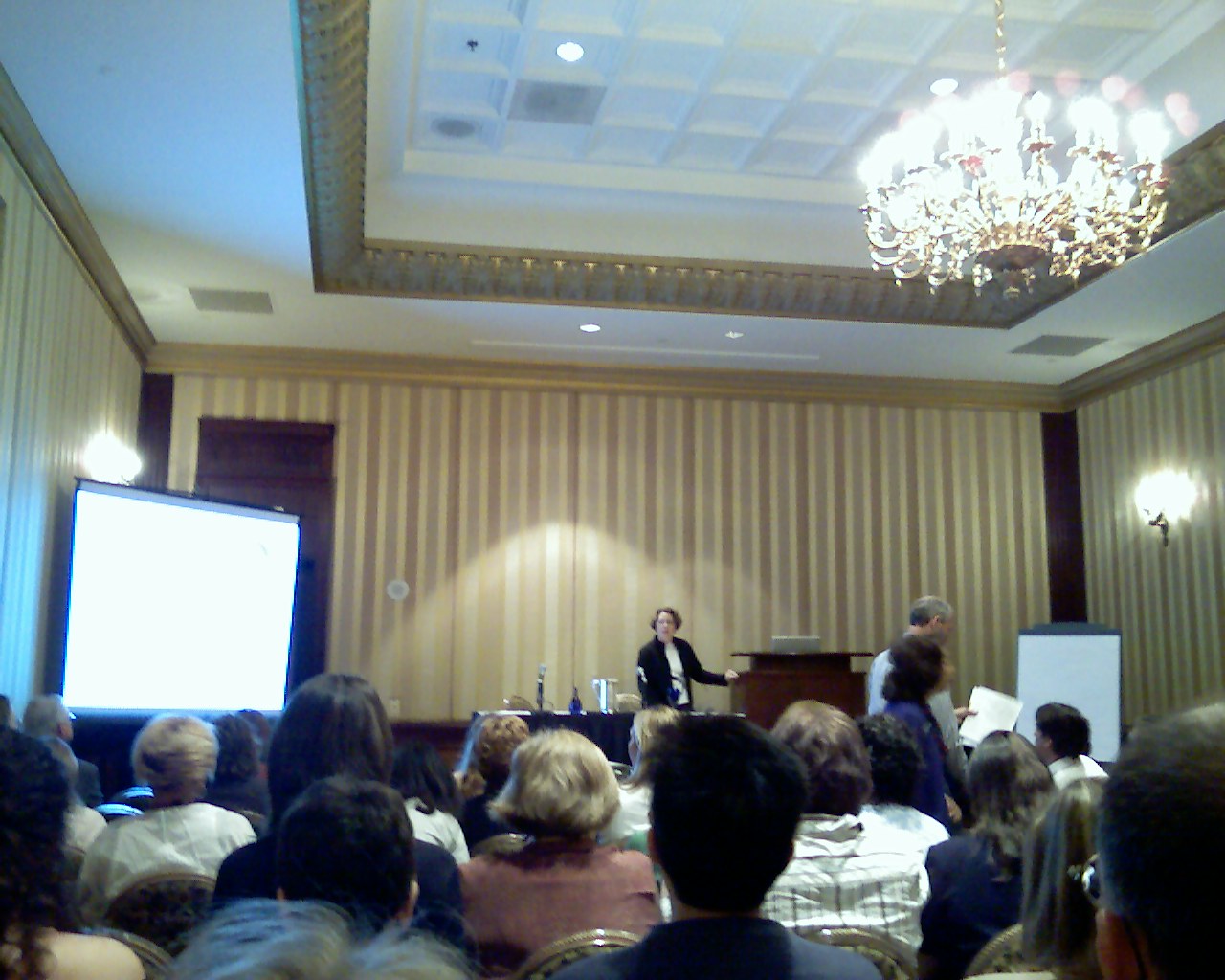
A: Good question! I’ve just agreed to deliver an STC Webinar in the fall on “Ten Ways to Increase Your Value as a Technical Communicator” where I’ll take up this subject in more detail.
One potential opportunity for technical communicators is disaster recovery or business continuity. After 9/11 many organizations began to take this more seriously. After Katrina, executive managers were even more convinced to fund these kinds of programs (even as they are cutting other types of projects).
Where do we come in? In a disaster, communications and clear procedures are key. Employees need to know what to do and where to go to keep operations going. Technical communicators are well positioned to take on this documentation effort. In addition, there’s a huge IT component to business continuity that requires detailed documentation that can be understood by the personnel who are tapped to start up the networks.
Q: Will you be offering workshops in change management through your chapter? Is this type of workshop STC chapters and SIGs should pursue? And, do you think change management will become an important career path for tech comm professionals?
A: I spoke at our chapter meeting on this topic last year, but workshops are a good suggestion –- for both chapters and SIGs.
This career path will probably appeal more to technical communicators who enjoy project management, training, and other people-oriented activities. But some aspects of this profession are less appealing, such as becoming a spin doctor for bankruptcies, layoffs, plant closings.
I think the biggest immediate opportunity for tech comm professionals to participate in change management is on the project level rather than the corporate level.
Q: In your opinion, what was one of the highlights of the STC Conference in Las Vegas? And what would you like to see next time that you didn’t see this year? I guess I’m asking, “What would you like to change” about the conference?
A: The highlight for me was the Leadership Day presentation of the plans for the upcoming year. (This is what I would change about the conference as well. All the conference attendees should hear about these developments, not just the small group that shows up for Leadership Day.)
I’m excited about the commitment to promote our profession and to adopt an international perspective. The global character of STC was really apparent this year! I loved hearing Tang Graat’s description of the Trans-Alpine chapter’s activities in Europe, including their Chocolate Raffle fundraisers. In two separate discussions, STC members who live and work in the US told me they’d joined the India chapter to strengthen ties with their coworkers and colleagues in that country. This kind of collaboration is fantastic.
Great talking with you, Holly! Thank you for sharing your views with us.
Thanks for inviting me!
For more from Holly, visit the new blog she's started as incoming president of STC Atlanta.
Tuesday, May 16, 2006
Session materials available for review
Don’t forget to check out the STC Session Materials page for presentation notes and slides.
If you liked my post on the “Future of Technical Communication,” you’ll find the following presentations interesting:
If you liked my post on the “Future of Technical Communication,” you’ll find the following presentations interesting:
- New Models and Images for Technical Communication, a preliminary report on research from Hillary Hart and Jamie Conklin
- Holly Harkness on change management in Communicating Change: How Technical Communicators Can Help
- Technical and marketing communication synergy in Integrated Strategic Communication: The Anatomy and Physiology of a $5B Proposal by Dan Voss
- Beth Agnew’s take on new media in Podcasting & Vidcasting: The Future of TechComm
- The ancient art of storytelling and its potential to help us understand the context(s) for our current and future work in The Writer’s Role: A Narrative Voice by Susan Sechrist
Friday, May 12, 2006
Back to Chicago and the future of technical communication
 STC-Chicago members may be headed home from the conference today, but they aren’t done blogging about their experiences in Las Vegas. Me? I’ll be talking about emerging roles and new opportunities in the field of technical communication.
Interested in the future of technical communication as I am, I sought out conference sessions with the phrases “new roles,” “future of,” “new media,” “consumer-generated content,” “technical marketing,” “integrated communications,” “strategic,” and “business analysis” in their titles.
Luckily, plenty of tech comm people in Las Vegas were interested in new directions for the field. My professional experience tells me, and recurring themes I’ve heard at the conference lead me to believe, that technical writing and editing will continue to be key to the work we do. Increasingly, however, those in tech comm will become known for their expertise as business strategists.
Learning how the work we do fits into the larger, strategic goals of our organizations will help us to articulate thoughtful, integrated communications strategies and to work across teams and geographies, spurring innovation and creating productive partnerships as we go.
More on this in future posts, as well as input from attendees who presented on these topics at the conference. Stay tuned.
Wednesday, May 10, 2006
Taking the scenic route between sessions


The view from the top of the Eiffel Tower at the Paris Hotel.
What happens in Vegas . . .
...need not stay in Vegas. At least not while STC-Chicago members are reporting from the street. 
As promised, this blog brings news, stories and photos from the conference. We've already provided post-transformation updates, including news about the selection of Susan Allen Burton as STC Executive Director. Susan begins her new role in August 2006. More information will be available soon at www.stc.org.
We'll continue reporting even after the conference is officially over, so keep checking back for updates. Better still, make use of the RSS feed provided on the right-hand side of this page.
As promised, this blog brings news, stories and photos from the conference. We've already provided post-transformation updates, including news about the selection of Susan Allen Burton as STC Executive Director. Susan begins her new role in August 2006. More information will be available soon at www.stc.org.
We'll continue reporting even after the conference is officially over, so keep checking back for updates. Better still, make use of the RSS feed provided on the right-hand side of this page.
Key notes
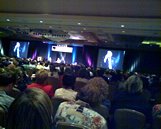
It’s true. Great technical sessions here. Networking, too.
Keynote speakers Cerf and Kahn offered an interactive Q&A session Monday morning after the address. They talked about new challenges and opportunities for technical communicators. Key issues faced by those in information architecture? Tracking project documentation and archiving data in new ways to increase availability and security over time and technologies.
Check here for a recent NPR interview with the speakers.
Tuesday, May 09, 2006
Quick hi from a conference attendee/new blogger
Almost two-thirds of the way through the conference...it's been interesting, and I've probably done more walking between the two hotel conference centers and other tourism sites than I normally do in a week.
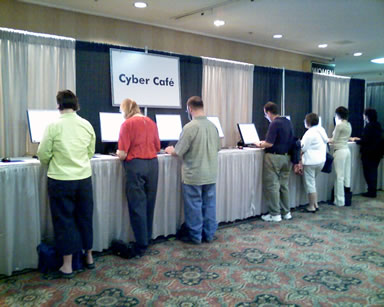
I'm Paul Lockwood, by the way, a TransUnion associate and Chicago STC member attending the conference who's never blogged before. And I'm trying to think quickly as I use a "Cyber Cafe" computer here to enter my thoughts, hopefully not delaying too many other people who might be waiting to use a PC.
This is--best as I can recall--my fifth STC conference in the 15 years that I've been in the technical communication field. It's always interesting to reacquaint myself with friends from the Orlando (where I used to live) and Chicago chapters...and to meet new people from all over the world (a Belgium representative was at a workshop table this morning).
The exciting thing about STC conferences is the wide variety of sessions offered during each time slot--you're sure to find something that you or your company might want to know more about. The problem is that you often have multiple sessions in the same time slot that sound interesting. Until they figure out a way to clone humans that's affordable, I guess I'll be attending one session per period...unless I duck out early on if the presentation doesn't sound exactly like what I thought it would be. DITA, translation, editing--all sessions I'm trying to get to...and get something out of. Very intelligent people presenting these sessions, as usual; now if I can just grasp all of the acronyms and subject matter, I'll be doing well...!
The entertainment possibilities in Vegas are endless, of course. Saw the hilarious Rita Rudner Monday night; going to see the Tony Award-winning comedic musical, "Avenue Q," this evening; checking out Don Rickles Thursday night.
Better get off the computer; hope this post wasn't too boring!
Paul
I'm Paul Lockwood, by the way, a TransUnion associate and Chicago STC member attending the conference who's never blogged before. And I'm trying to think quickly as I use a "Cyber Cafe" computer here to enter my thoughts, hopefully not delaying too many other people who might be waiting to use a PC.
This is--best as I can recall--my fifth STC conference in the 15 years that I've been in the technical communication field. It's always interesting to reacquaint myself with friends from the Orlando (where I used to live) and Chicago chapters...and to meet new people from all over the world (a Belgium representative was at a workshop table this morning).
The exciting thing about STC conferences is the wide variety of sessions offered during each time slot--you're sure to find something that you or your company might want to know more about. The problem is that you often have multiple sessions in the same time slot that sound interesting. Until they figure out a way to clone humans that's affordable, I guess I'll be attending one session per period...unless I duck out early on if the presentation doesn't sound exactly like what I thought it would be. DITA, translation, editing--all sessions I'm trying to get to...and get something out of. Very intelligent people presenting these sessions, as usual; now if I can just grasp all of the acronyms and subject matter, I'll be doing well...!
The entertainment possibilities in Vegas are endless, of course. Saw the hilarious Rita Rudner Monday night; going to see the Tony Award-winning comedic musical, "Avenue Q," this evening; checking out Don Rickles Thursday night.
Better get off the computer; hope this post wasn't too boring!
Paul
Monday, May 01, 2006
Live from Las Vegas . . .
 That's right! We're getting ready to report from the STC Annual Conference.
Welcome to our new blog, where conference attendees will have the opportunity to share their stories, insights and photos with the Chicago chapter and beyond. This blog will be the "go-to" spot for updates about the people, places and technologies featured in Las Vegas this year.
As you can see, Betsy Maaks has posted some pre-conference musings. Thanks, Betsy, for kicking off this effort. Attendees should feel free to start posting. It's easy!
If you are an STC-Chicago member and are attending the conference this year, please let us know. We'll help you to get started with the blog.
Contact us today to begin blogging.
Subscribe to:
Posts (Atom)